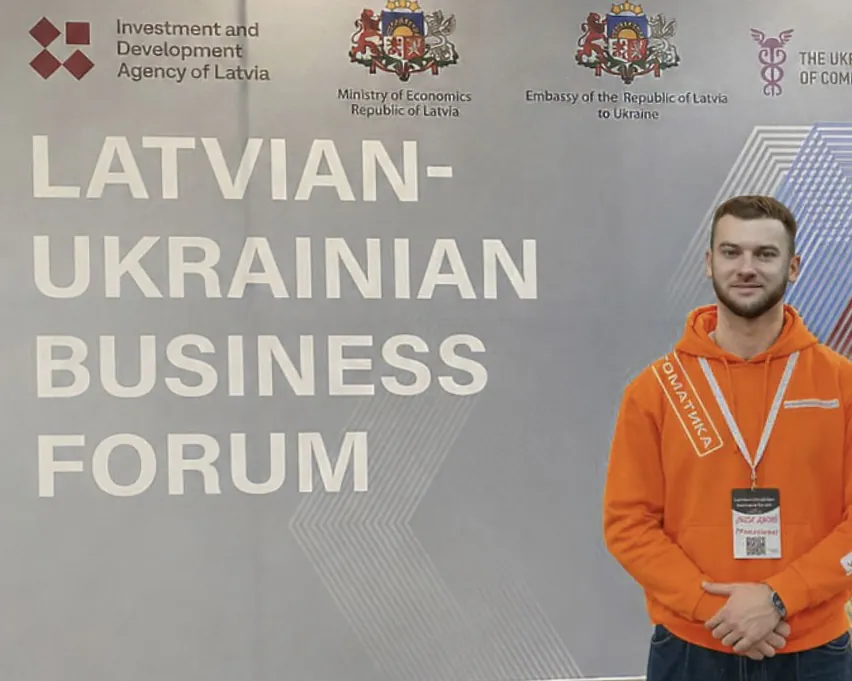
Latvia as a Gateway to the EU: What the Ukrainian-Latvian Business Forum Demonstrated

The Ukrainian-Latvian Business Forum, held at the Ukrainian Chamber of Commerce and Industry in Kyiv, marked a shift in how the two countries engage. While it was previously predominantly about support, the focus is now on practical cooperation—with specific projects, manufacturing, and long-term economic ties. 

One of the key signals is that Latvia is openly positioning itself as a platform for Ukrainian companies to enter European markets. This applies not only to the local market but also to access the Baltics, Scandinavia, and the wider EU economic area. 

For its part, Ukraine remains attractive as a market characterized by both scale and agility: demand, reconstruction challenges, and the ability to adapt solutions quickly create an environment that complements more structured European approaches. 

At the government level, a transition from humanitarian interaction to economic partnership has already been established. This means launching joint production facilities, cooperative projects, and investment initiatives. 

In the defense sector, this has a clear logic: the first stage involves government-to-government interaction, followed by a transition to direct business relationships. 

The memoranda signed at the forum between the Latvian Investment and Development Agency (LIAA) and Ukrainian associations are another signal that the process is moving into a practical phase. 

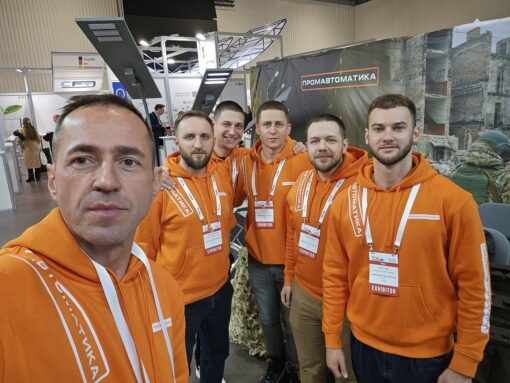
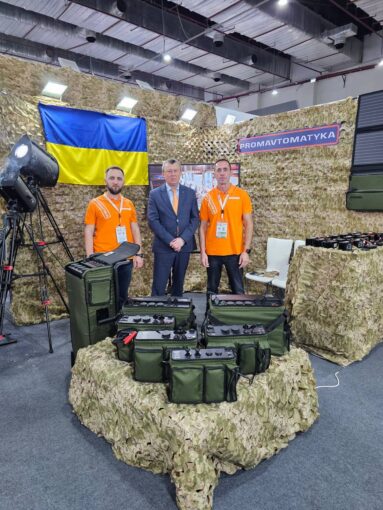
A specific focus noted by representatives of Promavtomatyka is the dependence on external suppliers, particularly Chinese components. At the industry level, this is no longer just an economic issue but a strategic risk: supplies can be restricted or halted at any moment. 

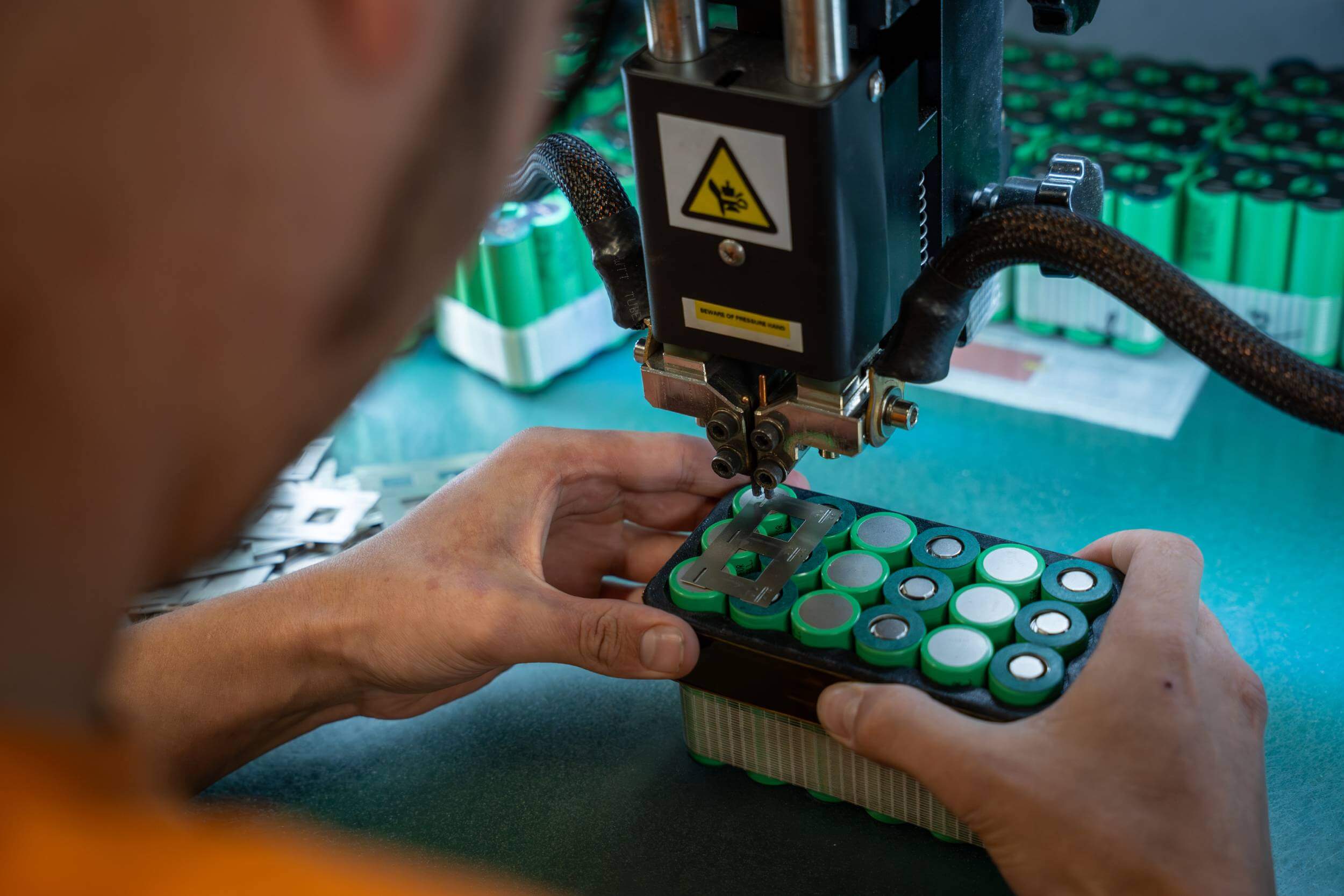
Ukraine is already moving toward localization but does not yet meet all its needs—particularly when it comes to complex components and materials. This opens up opportunities for joint manufacturing, but at the same time, it requires serious investment and coordination. 

Another important aspect is the change in product status. 

Many civilian solutions are being used by the military today, which automatically reclassifies them into the category of dual-use goods. Along with this, the level of regulation is increasing. 

The risk is that excessive restrictions could slow down development and exports. Therefore, the key issue is to find a balance between security and market access. 

A rather pragmatic assessment voiced at the forum suggested that up to 70–80% of new defense companies could disappear after the war ends. The reason is the lack of stable demand in foreign markets. 

Hence the logical conclusion: work on diversification needs to happen right now—both in terms of products and markets. 

For Ukrainian manufacturers, this forum provides several specific benchmarks: 

  • entering the EU happens through partnerships rather than independent exports 
  • Latvia can serve as an effective gateway for market entry and scaling 
  • defense projects require integration into government frameworks 
  • localization of production is becoming a critical condition for growth 
  • the dual-use sector requires dedicated attention to regulation and compliance 
  • diversification of products and markets is not a strategy for later, but an immediate priority 


Ultimately, it is no longer about “entering the European market” as an end goal, but about establishing a meaningful role within it through cooperation, joint manufacturing, and technological partnerships. 
MORE NEWS
June 4, 2026
The NATO Innovation Range Latvia offered compelling evidence of how rapidly modern warfare is evolving, and how the defense market is failing...
READ ARTICLE
May 14, 2026
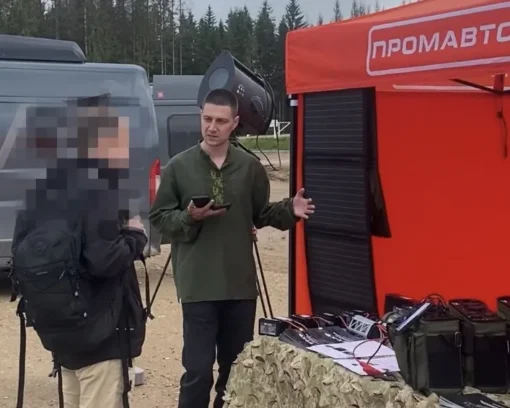
Instead of a conventional competition scenario between reconnaissance groups, this was a technologically saturated environment where the main challenge was not just completing the mission, but the ability to remain undetected in a space constantly monitored by digital systems and electronic warfare (EW) systems.  This was precisely the format of the Latvian Arona 2026 exercises, which took place this year with the participation of over 20 units from the Latvian National Guard.  The organizers significantly altered the concept of the exercises, adapting it to the realities of modern warfare and the lessons currently being analyzed and integrated from Ukrainian military practice.  Participants operated under constant aerial surveillance, conducting reconnaissance of routes and enemy positions. Special focus was given to the speed of information transmission, digital unit management, and real-time battle damage assessment.  In effect, Arona 2026 became an example of how the very logic of military training is changing: today, physical conditioning or traditional reconnaissance skills alone are no longer enough. A modern military scenario demands working with technology, digital communication systems, and rapid adaptation to a changing situation.  Ukrainian technological solutions were also showcased during the exercises. Promavtomatyka Group presented its BP Flashlight searchlights and BP Power charging stations. Interest in the products was high among both individual units and procurement officials.  The night demonstration of the BP Flashlight attracted particular attention. Following the demonstration, discussions continued directly with procurement representatives and military units.  The key takeaway is not only the interest in specific products, but the broader trend: Ukrainian solutions, in general, are increasingly becoming a part of professional discussions regarding modern army equipment—not merely as “wartime experience,” but as practical technologies that are field-tested in real-world conditions and ready for broader deployment.
READ ARTICLE
May 7, 2026
There is no direct entry into European supply chains — but there is a clear understanding of how to build one....
READ ARTICLE
May 2, 2026
Following the France–Ukraine Forum, Ukrainian defense companies gained access to practical tools for entering the EU market. The event was attended by Mykhailo...
READ ARTICLE
February 19, 2026
In Abu Dhabi, at UMEX 2026 — the world’s largest international exhibition of unmanned and autonomous technologies — the Promavtomatika Group...
READ ARTICLE
February 19, 2026
In Riga, at the Defence Industry Cooperation Forum, the Promavtomatyka Group of Companies presented its in-house developments. The company’s stand showcased...
READ ARTICLE
February 19, 2026
Specialists of the Promavtomatyka Group of Companies attended the international Defense & Security 2025 exhibition in Bangkok. It is one of...
READ ARTICLE
February 19, 2026
Promavtomatyka Group of Companies presented its innovative solutions for the military sector and energy-efficient reconstruction at the international exhibition-forum ReBuild Ukraine...
READ ARTICLE
February 19, 2026
Promavtomatyka Vinnytsia joined the Ukrainian delegation at the European Defence Innovation Forum (EDIF) in The Hague — an event that brought...
READ ARTICLE
December 5, 2025
From December 1 to 4, 2025, Cairo became a global hub of innovation as it hosted the Egypt Defence Expo (EDEX...
READ ARTICLE